



Most people in Kuala Lumpur have only ever eaten one kind of mooncake: the baked kind, dense and golden, sliced into quarters over tea. Snow skin is a different thing entirely, and if you have never had one, the box on the table at Mid-Autumn is going to confuse you.
Here is what separates them, and what to look for before you order.
Snow skin is not baked at all
A traditional mooncake is baked. The skin is a wheat-flour dough brushed with egg wash, and the oven gives it that deep brown finish and slightly chewy bite.
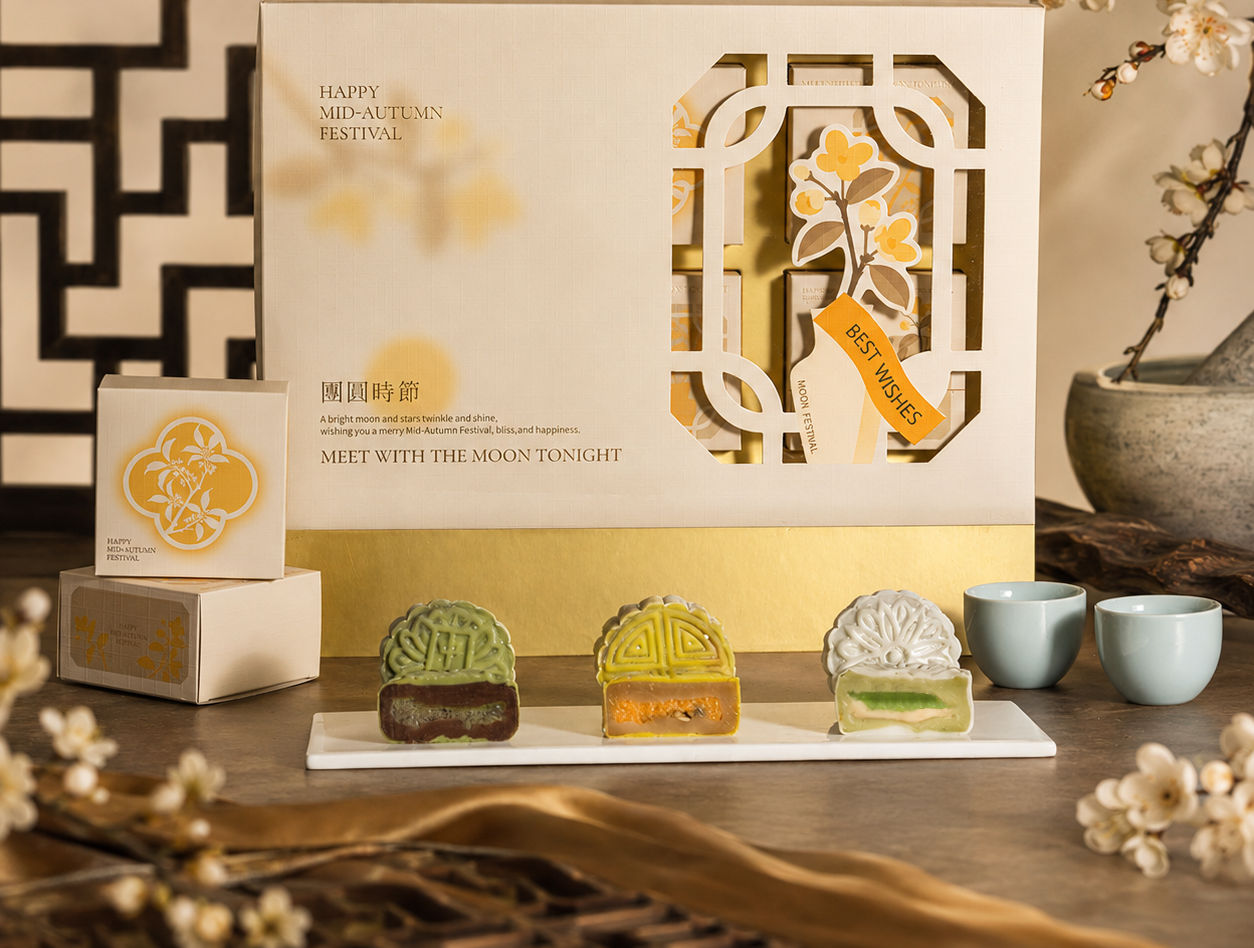
Snow skin never sees an oven. The skin is made from cooked glutinous rice flour, worked until it turns soft and faintly translucent, then chilled. It stays pale, which is where the name comes from. The texture sits somewhere near mochi: cool, yielding, a little bouncy.
That difference is not cosmetic. It changes what you can put inside.
Why the filling changes when you skip the oven
Put a molten salted egg yolk centre into a baked mooncake and the oven sets it. You get a firm yolk, which is the classic and perfectly good, but it is no longer molten.
Skip the bake and the centre stays as you made it. Cut one in half and it actually runs. That is the whole argument for snow skin, and it is why the flavours tend to be softer, colder and less caramelised than their baked equivalents.
It also means snow skin mooncakes live in the fridge. They are a chilled product with a short life, not a shelf-stable tin you keep in the cupboard until October.
Three flavours worth understanding
Flavour names on a mooncake box tell you less than you would hope. A few notes on what to actually ask:
Salted egg yolk with lotus paste. The benchmark. The question worth asking is whether the paste is real lotus seed or green bean — green bean is cheaper, more common than most people realise, and noticeably flatter in flavour. Some versions add pumpkin seed for crunch against the soft yolk.

Pandan gula melaka. The local one. The risk is sweetness: pandan is sweet, gula melaka is sweet, and together they can collapse into one flat note. A good version is salted to hold it back.

Matcha. Easy to make and easy to ruin. Cheap matcha turns bitter and dusty; over-sweetened matcha stops tasting of tea. Black sesame underneath is a common pairing because it gives the bitterness somewhere to sit.

How to check the halal position before you order
This is the question we get asked most, and the honest answer has more than one layer.
Malaysia's only recognised halal authority is JAKIM and its state counterparts. A premises with full certification will have a certificate you can verify by name on the official register. Anything else — a logo on a box, a claim on a website, a supplier's word — is not the same thing, and you are entitled to ask which one you are being offered.
Three practical checks:
- Ask what is certified: the premises, or the ingredients? These are different claims. An ingredient-level statement means every component is sourced halal certified. A premises-level certification covers the kitchen itself.
- Ask about alcohol and animal fats specifically. Pastry work uses both more often than people expect — vanilla extract, certain emulsifiers, some gelatines.
- Verify rather than assume. If a certificate is claimed, it can be checked. If it cannot be checked, treat it as a claim.
For our own boxes: every ingredient that goes into our snow skin mooncakes is halal certified. That is an ingredient-level statement and we are careful to describe it exactly that way rather than overclaim. We have written a longer piece on how to check halal certification at a Malaysian bakery if you want the full process.
Storing them, and the ten-minute rule
Keep snow skin mooncakes refrigerated. They are not designed to sit out.
But do not serve them straight from the fridge either. Cold mutes flavour, and a mooncake taken directly from 4°C tastes like a fraction of itself. Take the box out roughly ten minutes before serving. The skin softens, the filling loosens, and the flavours come back.
If you are gifting a box, this is worth passing on. Most people will not know.
Buying a box as a gift
Mid-Autumn gifting in Malaysia runs wider than family. Parents and in-laws, yes, but also colleagues, clients and whoever signs off your invoices.
A few things that matter more than they sound:
- Count your recipients before you count boxes. Most people underestimate by two or three, then scramble in the final week when the good boxes are gone.
- Check the delivery window, not just the date. Mid-Autumn stock is made to a schedule. Ordering early rarely means receiving early — it means securing a slot.
- Send it directly. Delivering to the recipient's address with a message card saves you a round trip and arrives better than a box handed over in a car park.
A note on where ours came from
Our recipe is not developed for a season. It came from my great-grandparents' Cantonese restaurant, Yook Woo Hin 玉壺軒, and we have not changed it in years.
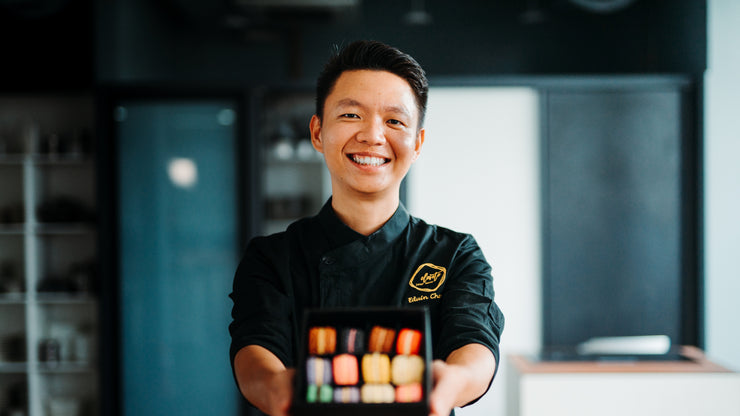
That is partly stubbornness and partly arithmetic: the same families order it every Mid-Autumn, and they would notice immediately if we did. Real lotus paste, a salted yolk that still runs, pandan gula melaka held back with salt, and matcha left bitter with black sesame underneath. Six to a box, two of each.
You can see the current box in our Mid-Autumn collection, or go straight to the snow skin mooncake gift box. Delivery is free across KL, PJ and Selangor.